
Infrared
Collagen.
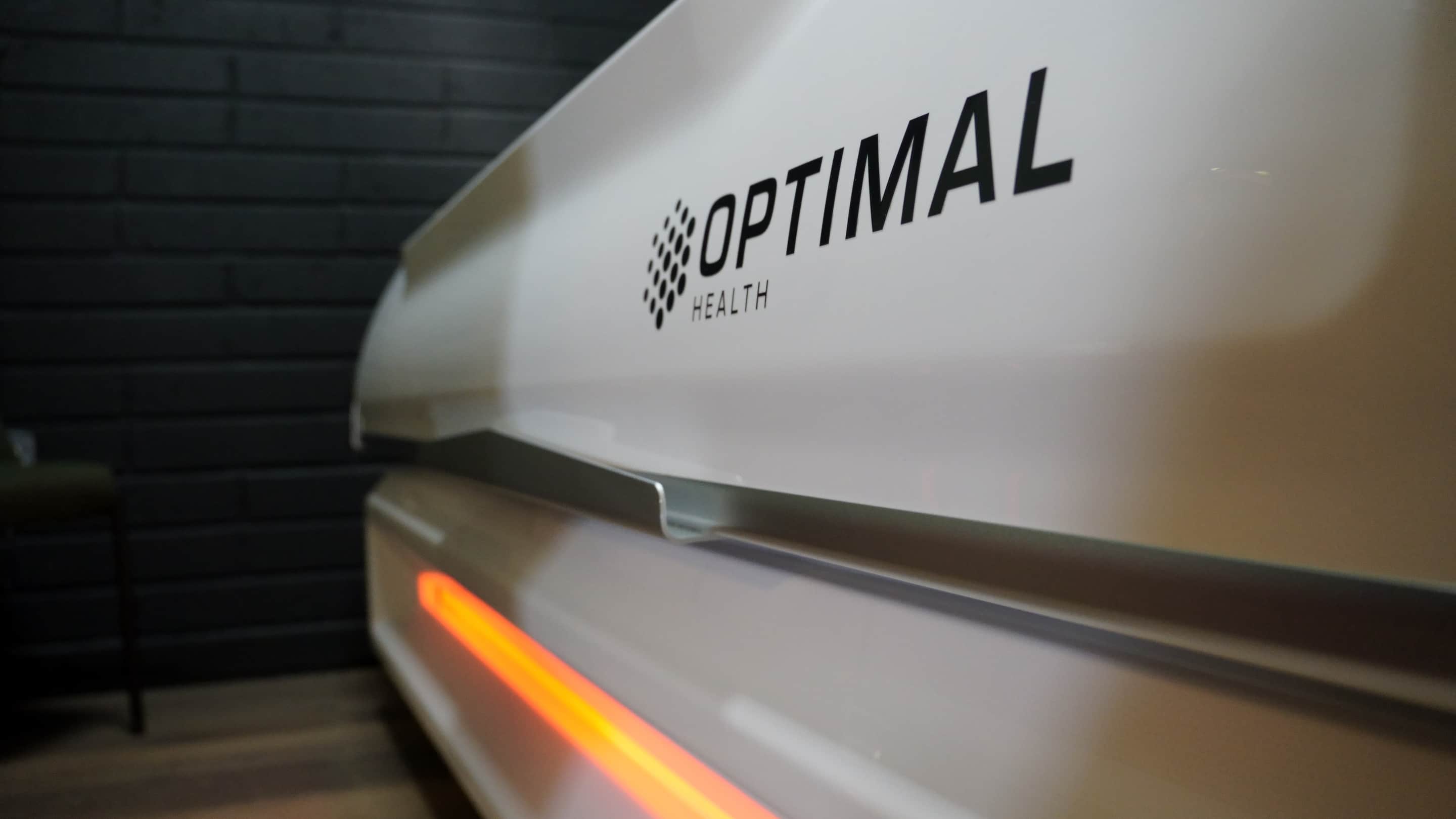
The infrared bed, used for skin and connective tissue. It works over weeks of sessions.
What collagen is.
Collagen is the protein that keeps skin firm and elastic and gives tendons and ligaments their strength.
Your body makes and breaks down collagen all your life. Age, sun, training load, hormones and injury tip the balance towards breaking it down. When that happens, skin loses firmness, and tendons and joints feel it more under load.
A run of sessions can shift that balance a little back towards making collagen, over months.
How the bed works.
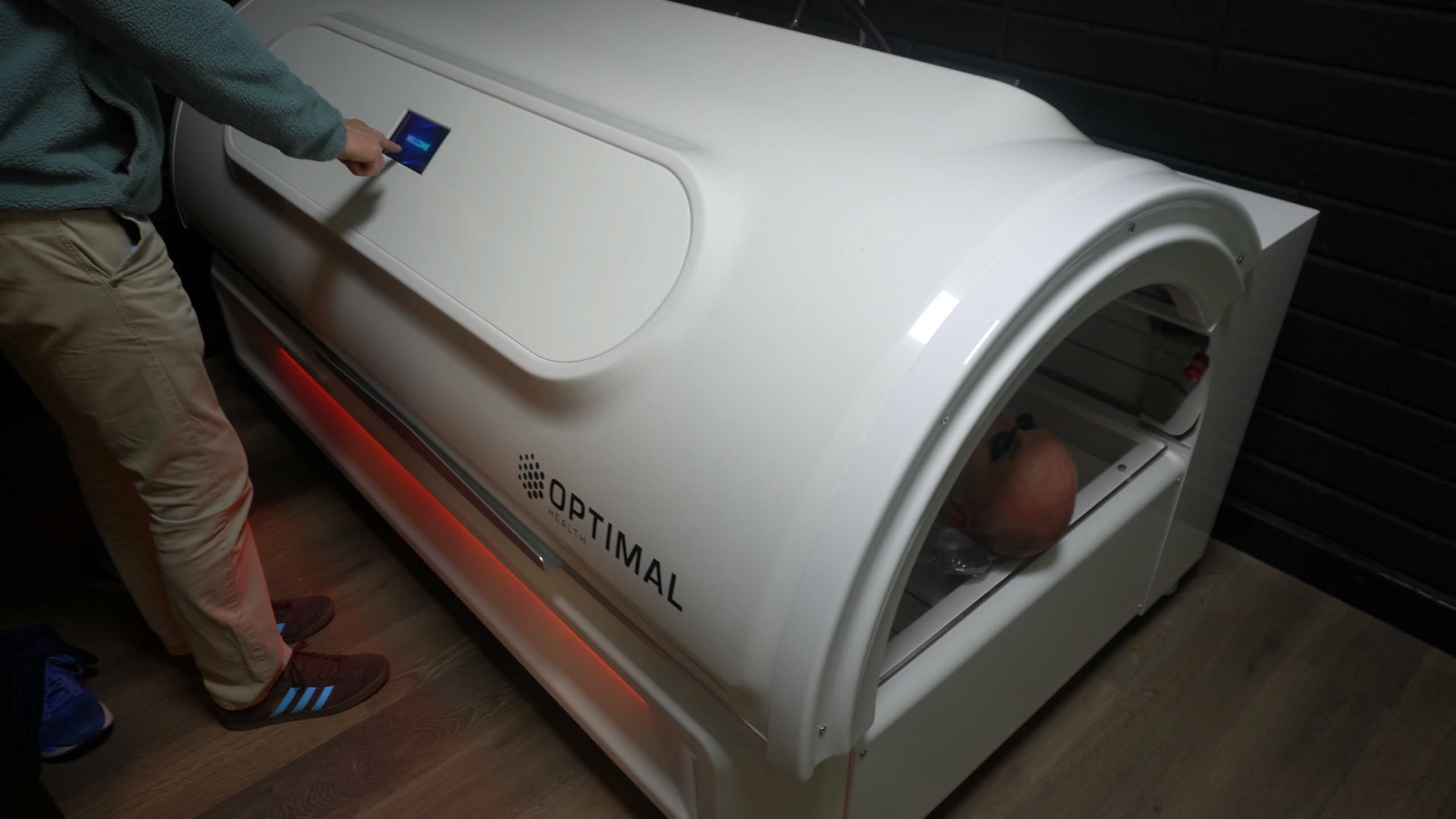
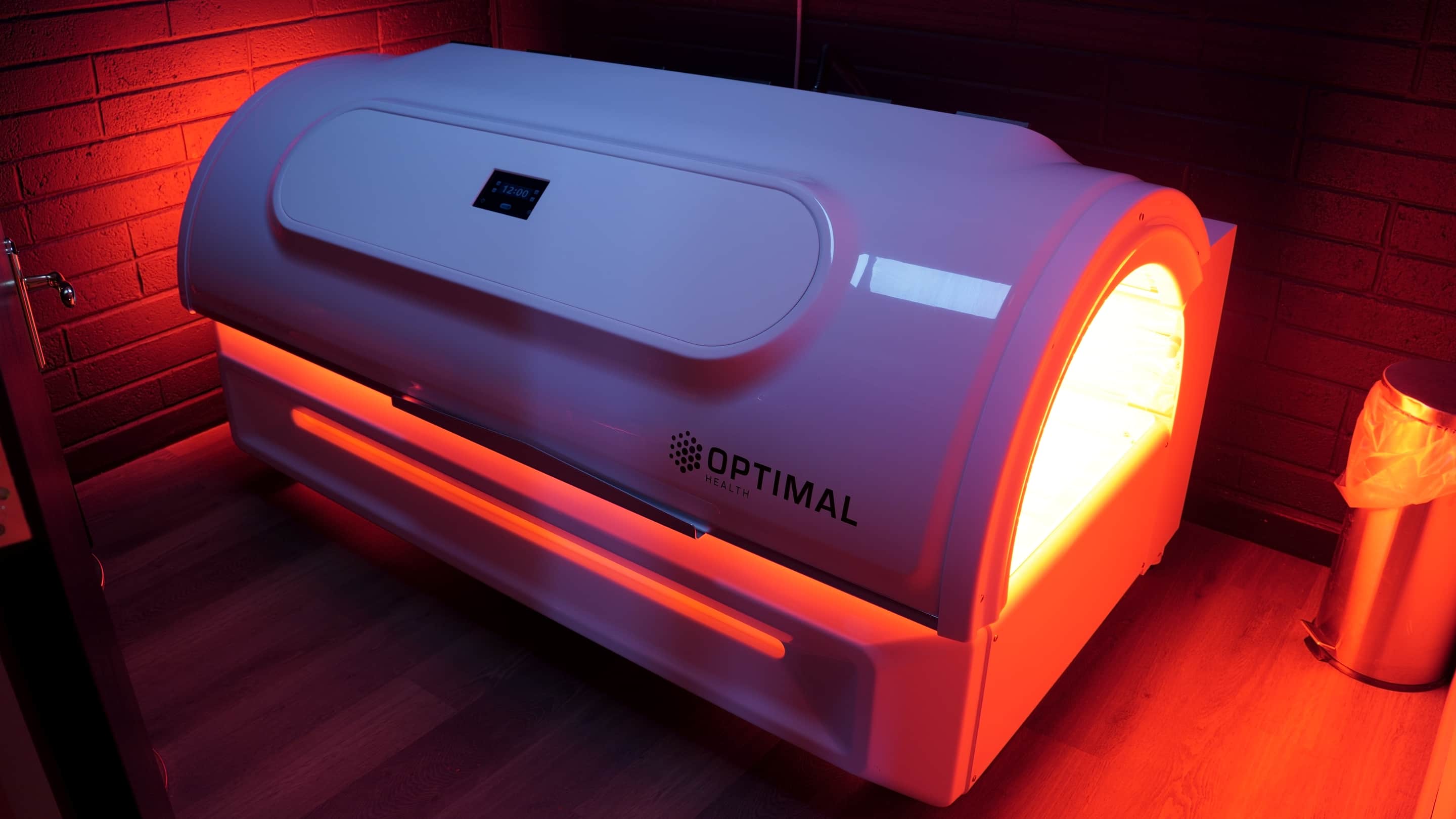
The bed gives off red and near-infrared light at five wavelengths: 633, 660, 810, 850 and 940 nm. You can see the red light. Near-infrared light is invisible and reaches deepest into tissue.
This is called photobiomodulation. The light passes into your skin and the tissue beneath it. There, the mitochondria (the part of the cell that makes energy) absorb it and can then make more energy.
Fibroblasts, the cells that make collagen, can use that energy to lay down more of it. The enzymes that break collagen down are thought to slow at the same time, and circulation can improve, bringing in the materials to build with.
You undress for the bed, because clothing blocks the light. The less you wear, the more of your skin it reaches; underwear is fine. You're on your own in the room.
What this isn't
There are no needles and no downtime.
We don't diagnose anything, offer clinical skin treatments or take before-and-after photos. If a doctor or dermatologist is treating your skin, follow their advice and tell us before you book.
What people use it for.
People book it for two things.
Skin firmness and texture
- Supports the skin's own collagen production over a run of sessions
- Encourages circulation to the skin
- May support elasticity, so skin feels springier
- May support the skin's natural renewal
Tendon, ligament and joint comfort
- Acts on the connective tissue that carries load, including tendon, ligament and fascia
- May help tendons and ligaments handle load
- Supports joint comfort and easy range of movement
- May ease stiffness after a hard session or long days at a desk
- Use it alongside your physio's or coach's plan
The same machine
The same bed as infrared.
It's the same bed as on the infrared page, at the same price. One session works on skin, muscle and joints at once, so there's nothing to book twice.
Most people start with two or three sessions a week for the first two weeks, then settle into a routine.
What to expect over twelve weeks.
This is what the research suggests is happening at each stage. Use it as a rough guide.
-
Weeks 1–2
Circulation first.
In the first two weeks, the light is thought to work on cell energy and circulation. Blood flow can increase and inflammation can settle, so skin may look better hydrated and tissue may feel calmer. No collagen has been rebuilt yet.
-
Weeks 4–6
Building collagen.
Collagen-making cells can start laying down new collagen, along with the molecules that hold water in the skin. Skin can feel springier and better hydrated, and collagen in tendons and ligaments starts to organise. Eating enough protein and vitamin C helps, because the body builds collagen from them.
-
Weeks 8–12+
Reorganising.
Later, the collagen fibres are thought to reorganise and strengthen, while the enzymes that break collagen down slow. Connective tissue may handle load more comfortably. After twelve weeks, the aim is to keep it up.
Prices.
These are the same prices as infrared. There's nothing extra to pay.
Getting started
How to start.
Start with a single session to see how you find the bed. After that we recommend a block, because it works over weeks.
If you have questions before you book, ring us or send an email.