01
Arrive hydrated and skip a heavy meal beforehand.

Therapy
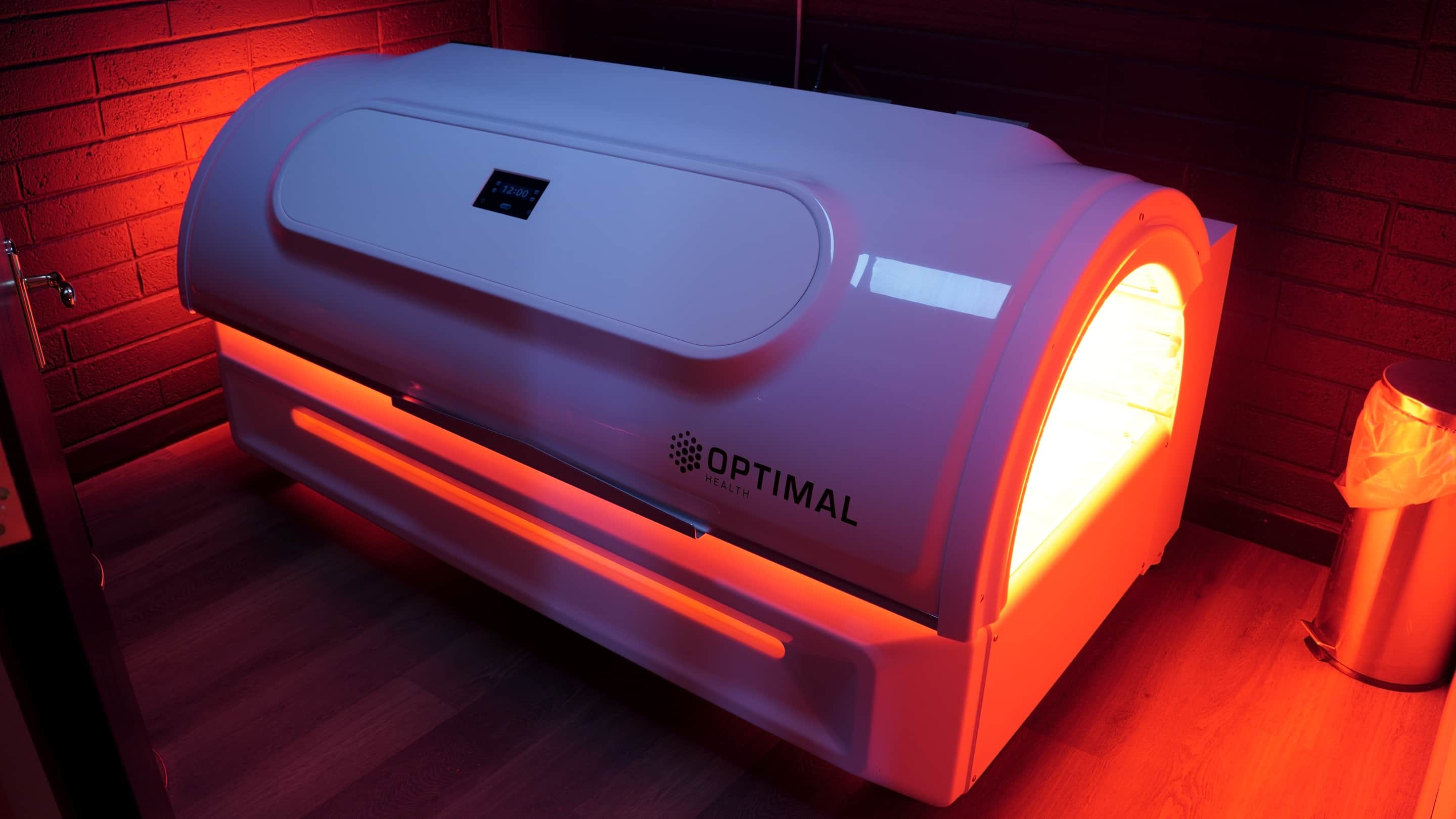
You lie on a bed of red and near-infrared light for twelve minutes. Most people book it to wind down and to ease stiff muscles and joints.
You undress and lie down, and the bed warms up over twelve minutes. The heat comes from red and near-infrared light. The air doesn't get hot, so you barely sweat.
The light can't get through clothes, so wear as little as you're comfortable with. Underwear is fine.
Most people book it in the evening, because it's easier to wind down afterwards than to go back to work. If you book it in the morning, it can give you energy for the day.
01
Arrive hydrated and skip a heavy meal beforehand.
02
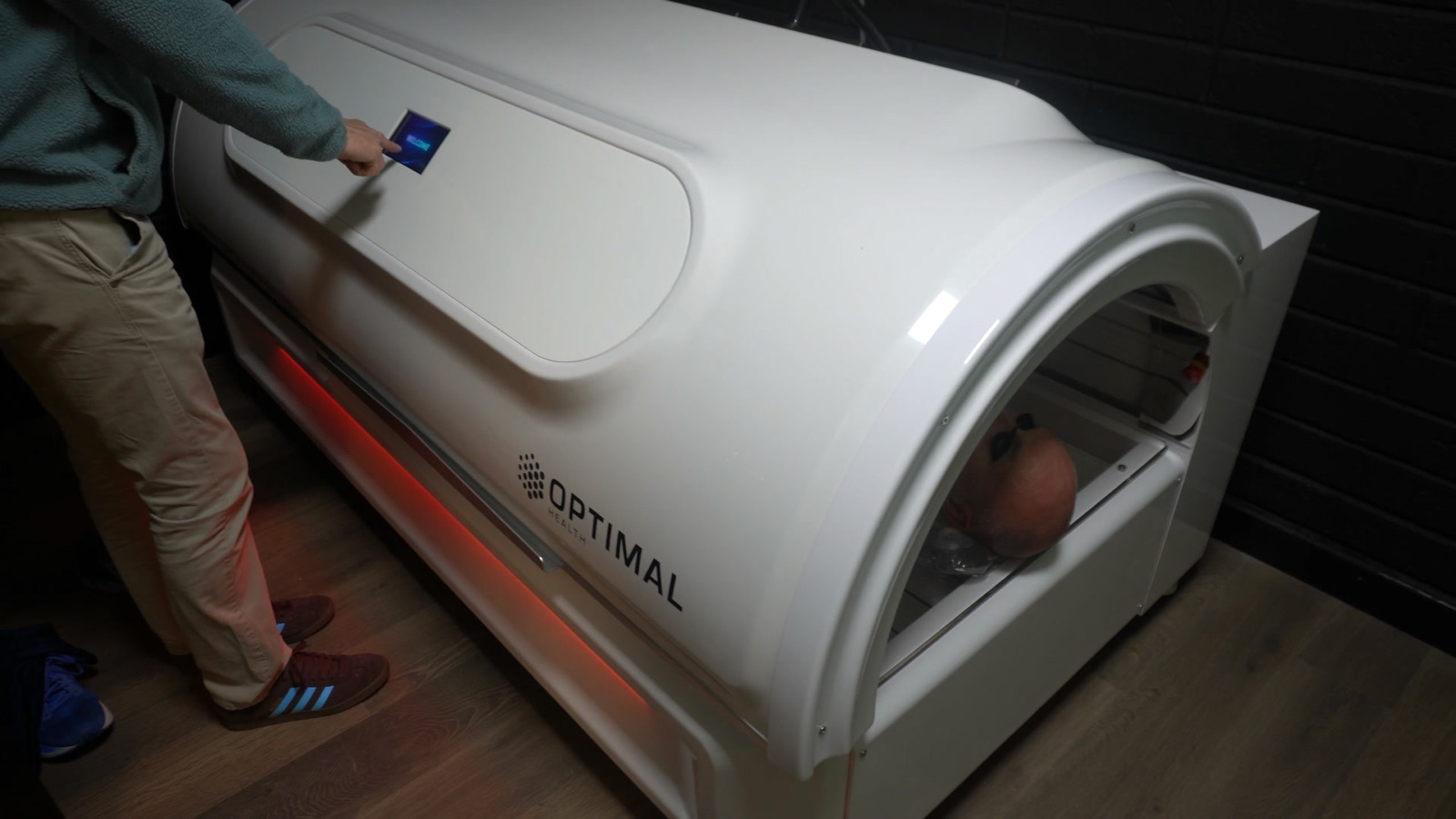
A member of our team shows you in, sets the bed up and leaves you to it.
03
You lie on the bed for twelve minutes, on your own in the room. Most people close their eyes.
04
Have a glass of water, then carry on with your day.
Session length
12 minutes
The bed runs for twelve minutes. The whole visit takes less than half an hour.
How often
Two or three a week
Plan it by the week. The guide below is set out week by week for that reason.
Mostly booked for
Winding down
Also booked for tight muscles and joints, and for skin. Usually in the evening.
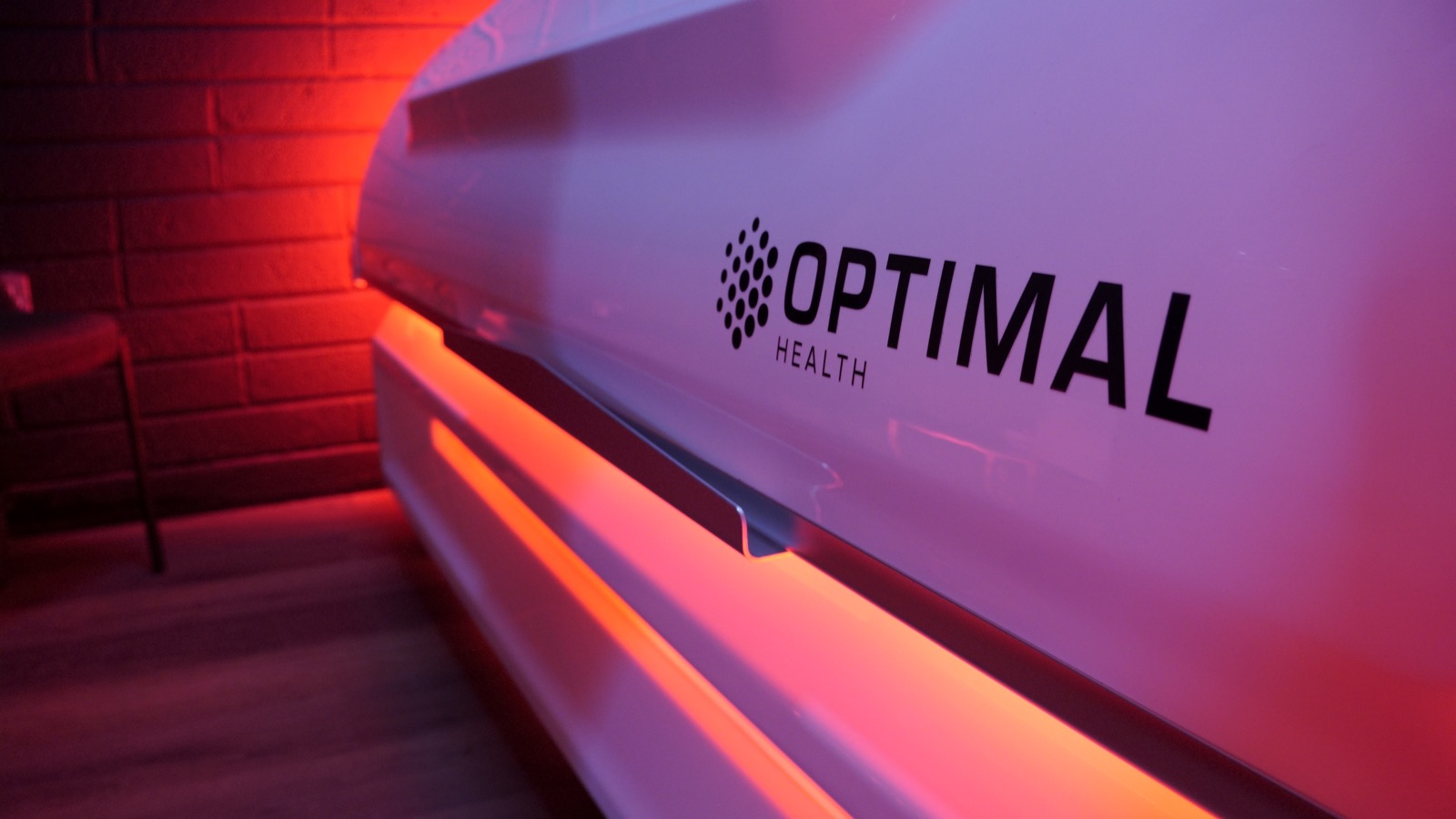
The bed gives off red and near-infrared light at five wavelengths: 633, 660, 810, 850 and 940 nm. Red is the light you can see. Near-infrared is invisible and reaches deepest into tissue.
Cells absorb this light, mainly in the mitochondria, the part of the cell that makes energy. The current understanding is that they can then make more usable energy.
With more energy, cells can do more of their normal work. Collagen-making cells can lay down more collagen. Small blood vessels can widen to bring in more oxygen and nutrients. Irritated tissue can settle. These changes build over a course of sessions.
The bed
633 · 660 · 810 · 850 · 940 nm
Five wavelengths of red and near-infrared light, and no ultraviolet.
This is what the research suggests is happening at each stage. It's still being studied, so use the weeks as a rough guide.
Weeks 1–2
Circulation.
In the first two weeks, the light is thought to work on cell energy and circulation. Blood flow can increase and inflammation can settle, so tissue may feel calmer and less tight. No collagen has been rebuilt yet.
Weeks 4–6
Building collagen.
Collagen-making cells can start laying down new collagen, along with the molecules that hold water in the skin. Skin can feel springier and better hydrated. Eating enough protein and vitamin C helps, because the body builds collagen from them.
Weeks 8–12+
Reorganising.
Later, the collagen fibres are thought to reorganise and strengthen, while the enzymes that break collagen down slow. After twelve weeks, the aim is to keep it up with regular sessions.
No. Sunbeds use ultraviolet light, and this bed uses none. It runs on red and near-infrared light, so there's no tanning and no burning.
No. It's a wellness session to help you relax and rest. We don't diagnose or treat medical conditions. If you have one, follow your doctor's advice and tell us before you book.
Yes. Clothing blocks the light, so the less you wear, the more of your skin it reaches.
Underwear is fine. It's your choice.
You're on your own in the room. We set the bed up, check you're comfortable and leave you to it.
Arrive hydrated and skip a heavy meal beforehand.
A little, or not at all. It feels like a comfortable warmth. Have a glass of water afterwards.
Yes. Many people train earlier and book the bed in the evening to wind down. It adds no training load, so it also suits a rest day.
For example, some people book hyperbaric oxygen in the morning, infrared in the evening, and HIFEM or a massage when they have time. Tell us what your week looks like and we'll help you space them out.
Please check with your GP first if you're pregnant or trying to conceive, or if you have a cardiovascular condition, heat intolerance or a photosensitive condition.
The same applies if you take medication that makes you more sensitive to light. This includes some antibiotics, acne and retinoid medication, some diuretics and anti-inflammatories, and St John's Wort. If you're on anything, check the leaflet or ask your pharmacist, and tell us before you book.
If you have skin sensitivities, ask your GP or dermatologist. For teenagers we need guardian consent, and for older adults with health considerations we may ask for GP guidance before going ahead.
Getting started
Try one session first. After that we recommend a block, because the effect builds over a course of sessions.